Contractors are under constant pressure to deliver precision, speed, and reliability—without compromising quality. Whether you’re building structural components or architectural details, the choice of cutting technology can directly impact your bottom line.
Enter custom laser cutting services and waterjet cutting—two cutting-edge methods that are transforming how contractors approach custom metal fabrication. Both are precise. Both are powerful. But each comes with its own strengths, limitations, and ideal use cases.
Understanding the fundamental differences isn’t just helpful—it’s essential.
Laser Cutting: Precision with Speed
Laser cutting operates by using a concentrated beam of light to slice through material with extreme accuracy. It’s fast, efficient, and great for producing tight tolerances and detailed patterns—especially in thin to medium-gauge metals.
Best for:
- High-volume runs
- Thin materials like sheet metal, aluminum, stainless steel
- Designs requiring clean lines and fine detail
- Jobs that demand quick turnaround
Custom laser cutting services are often favored for architectural panels, signage, enclosures, brackets, and components where precision and finish matter—but speed is equally important.
However, laser cutting has its limits. It struggles with extremely thick materials, heat-sensitive substrates, and reflective metals like copper or brass. Heat can also cause a slight discoloration or edge hardening, depending on the material.
Waterjet Cutting: Versatility with Integrity
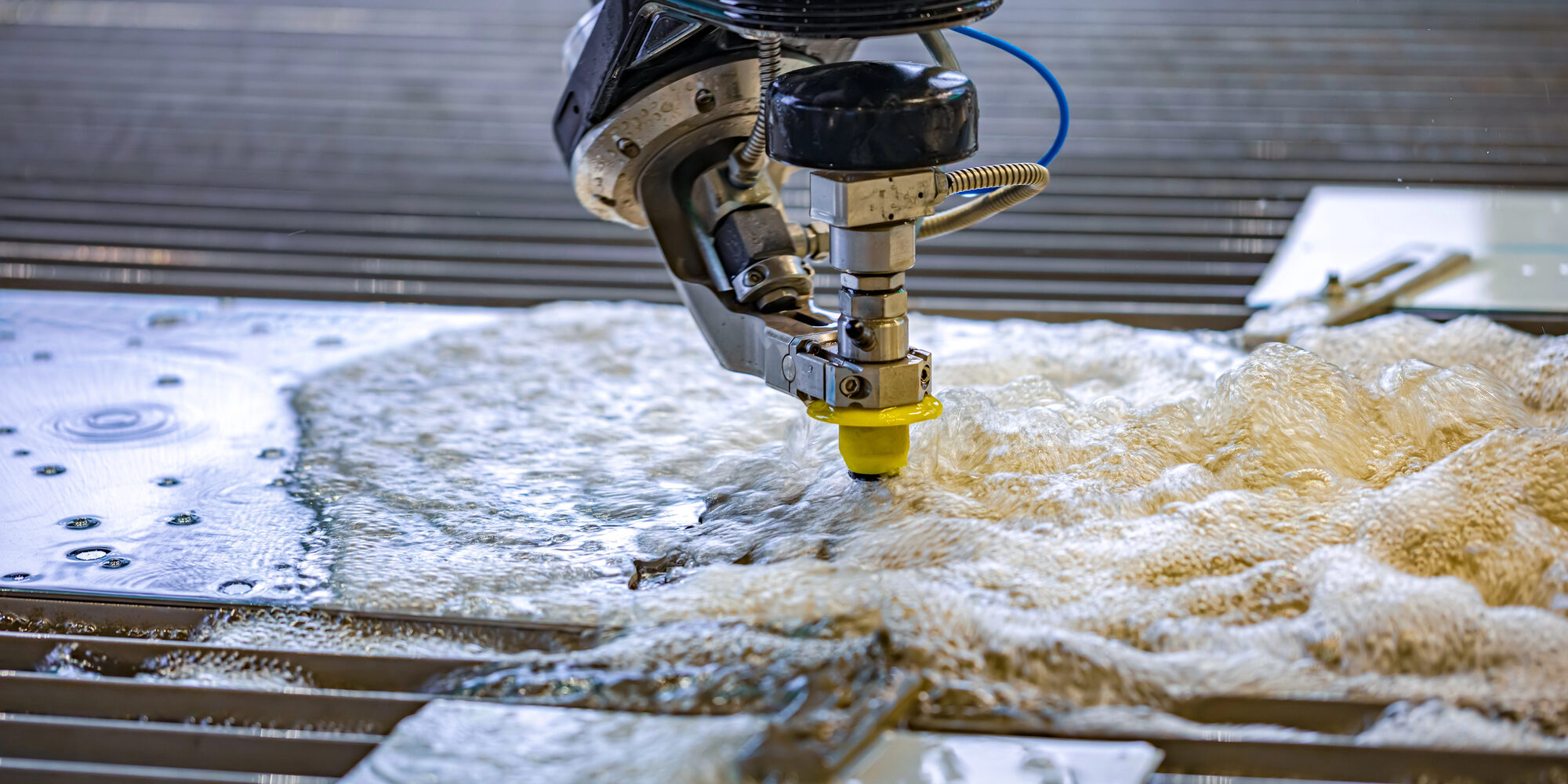
Waterjet cutting works differently. It uses high-pressure water, often mixed with an abrasive, to erode material without heat. That makes it ideal for jobs where thermal distortion or structural integrity is a concern.
Best for:
- Thick or dense materials (steel, stone, glass, composites)
- Heat-sensitive or laminated materials
- Projects requiring clean, burr-free edges with no heat-affected zone
- Cutting materials, lasers can’t touch
Waterjet cutting may not match laser speed, but it wins on material range and cut quality. Contractors choose waterjet when working with exotic alloys, delicate surfaces, or layered materials that can’t risk being altered by heat.
Real-World Decisions: What’s the Job Demanding?
This is where many comparisons fall short. The real decision between laser and waterjet cutting isn’t just technical—it’s situational. Contractors don’t work in ideal labs; they work on deadlines, with mixed materials, shifting specs, and real-world constraints.
Here’s what to consider:
1. Material Type and Behavior
Working with stainless, aluminum, or acrylic? Laser likely gives you a faster, cleaner cut. But with thick steel, glass, composites, or anything prone to warping? Waterjet wins. Its cold-cutting method protects the material’s structure and avoids heat damage.
2. Finish Quality and Post-Processing
Laser can leave a heat-affected edge, especially on thicker metals. That may require secondary finishing. Waterjet produces a smoother, burr-free cut—often ready for use as-is, especially for exposed or assembled parts.
3. Production Speed and Volume
Laser cutting is faster and more efficient for large runs and repeatable shapes. Waterjet is slower but more flexible, especially for one-off parts or varying material types. If you’re in prototyping or working with unconventional designs, waterjet offers more adaptability.
In short, every job has different priorities—speed vs. versatility, precision vs. material preservation. Choosing the right process means matching the tool to what the job actually demands.
What Precision Really Means
Don’t confuse technical tolerances with practical performance. Precision in the field means more than microns—it means how well parts fit, function, and finish once they leave the cutting table.
Laser cutting offers surgical precision, especially on thinner materials. But its heat-affected zone can alter material properties or edge quality. Waterjet may not match laser in raw speed or ultra-fine detail, but it leaves material untouched and structurally sound—often a smarter kind of precision.
Cost Considerations: It’s Not Just About the Cut
Pricing structures can vary widely between shops, so it’s not always as simple as saying one method is cheaper than the other. What matters more is understanding how each process impacts the total job cost—not just the cutting itself.
Laser cutting tends to be more efficient for jobs involving repeatable shapes, consistent materials, and higher volumes. It’s faster, can often be automated, and typically requires minimal cleanup—factors that can help reduce time and labor on the back end.
Waterjet cutting, while generally slower and more resource-intensive, offers value in other ways. It can eliminate the need for secondary processes like grinding or re-machining. It also handles a broader range of materials without requiring different equipment, which can simplify planning and reduce setup costs—especially on projects involving multiple material types.
In other words, the more complex or varied the job, the more waterjet may earn its keep. The more consistent and streamlined the job, the more laser may pay off.
When choosing between the two, it’s worth thinking beyond the cut itself—look at how each method affects the entire project workflow, from prep to finish.
The Future of Custom Metal Fabrication
Today’s best fabrication shops don’t force you to choose—they offer both custom laser cutting services and waterjet cutting, so you can pick the right process for each part of your project.
As design complexity increases and material diversity grows, having access to both technologies gives contractors a serious edge. Whether it’s speed, accuracy, versatility, or material integrity, knowing how to choose between laser and waterjet keeps your work sharp—and your project on track.
There’s no universal “better” cutting method—only the one that fits your job. Use laser cutting when you need speed, repeatability, and sharp detail. Use waterjet cutting when you need flexibility, edge quality, or to protect the material’s integrity.
In a world where contractors are expected to deliver perfection on a deadline, understanding these tools isn’t just technical knowledge—it’s a competitive advantage.
Start Your Custom Fabrication Project Today
From sheet stock to polished perfection, Abraham Steel delivers high-quality results on projects of any size. Whether you need precision cutting, expert bending, professional welding, or flawless polishing — we’ve got you covered.
Contact us now to bring your custom metal solution to life with craftsmanship you can trust.